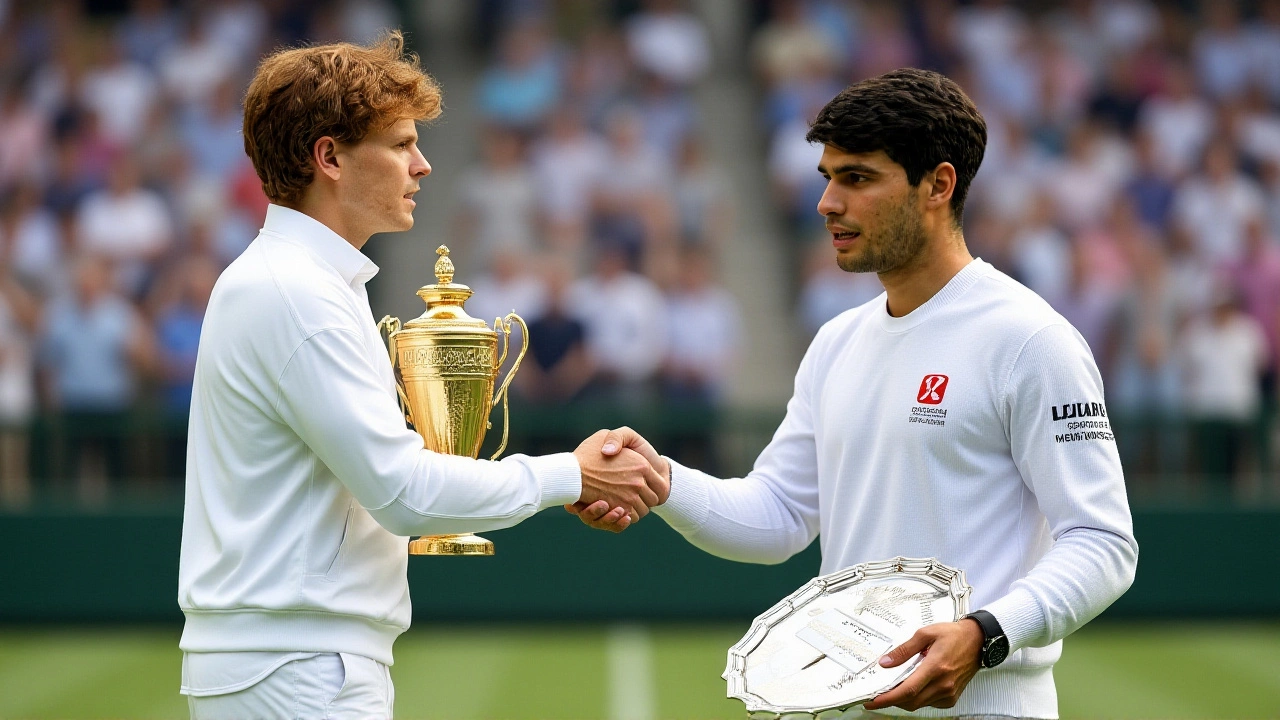
When Jannik Sinner stepped onto Arthur Ashe Stadium in a navy blue Nike polo at the 2025 US Open, he wasn’t just playing tennis—he was walking a runway. The 2025 tournament, held in Flushing Meadows, New York City from August 25 to September 10, didn’t just crown champions. It turned the court into a high-stakes fashion lab, where athletic performance met runway ambition. Nike, Lululemon, and Vuori didn’t just supply gear—they launched full-blown brand narratives through their athletes. And for the first time, tennis fashion wasn’t an afterthought. It was the headline.
The Red Revolution on Court
"Seeing Red" wasn’t just a headline in Sports Illustrated—it was the unspoken uniform code. Lululemon led the charge with Frances Tiafoe, whose signature red tiger-stripe ensemble—shirt, shorts, headband, even wristbands—turned heads during his third-round match. The look, designed in collaboration with Tiafoe himself, wasn’t just bold. It was intentional. "We wanted to make him look like he’s moving through fire," said one insider familiar with the design process. Meanwhile, Coco Gauff matched that intensity with her New Balance kit: a cropped jersey and pleated skirt in Angora Skirt/True Red, paired with her Coco CG2 sneakers in Urgent Red. Even Wilson, a longtime equipment brand, joined the red wave, outfitting its entire roster in crimson.
But it wasn’t just about color. It was about control. For years, tennis fashion meant white cotton and minimal logos. Now, players are demanding customization. Emma Raducanu wore a sleeveless Nike tank in reddish-pink layered over a burgundy skirt—a look that sparked over 2 million social media impressions in 48 hours. "It’s not just performance anymore," said tennis stylist Ronald Burton, who’s worked with Williams since 2021. "It’s identity. Players know their fans don’t just buy rackets—they buy the vibe."
Vuori and the New Guard
Enter Vuori, the California-based performance brand that quietly disrupted the tennis world. Just hours before Lorenzo Musetti took the court, Vuori announced him as their first tennis ambassador. His debut? A dark gray sleeveless tank with the Vuori logo centered, white shorts, and—here’s the twist—a backwards baseball cap. "It broke every rule," said longtime US Open commentator Greg Garber. "But it felt right. Like he owned it."
That same look was already live in Vuori’s national campaign featuring Jack Draper, the 22-year-old Brit who wore identical gear during his August 25 match against Federico Agustin Gomez. Draper’s cap wasn’t a fashion accident—it was a statement. "Tennis has been stuck in the 90s," Draper told Tennis Magazine post-match. "We’re not just athletes. We’re cultural figures. Why should our clothes say otherwise?"
Venus Williams: The Fashion Free Agent
Then there’s Venus Williams. At 44, she’s the only player who doesn’t wear a sportswear brand’s logo. That freedom? It’s priceless. On August 19, she wore a custom Khaite navy-blue minidress—lined with white, built-in sports bra, undershorts, and a crisp white visor. The outfit, designed by New York’s Khaite label, echoed her 2025 Met Gala look. Two weeks later, she returned in a custom Emilio Pucci minidress with swirling black, brown, and beige prints, accessorized with a silk tie visor and her trusty Lacoste sneakers.
"She’s not sponsored. She’s curated," said fashion editor Maria Chen of WWD. "That’s the future. Brands don’t just want athletes—they want icons who can elevate their aesthetic. And Venus? She’s the ultimate curator."
Why This Matters Beyond the Court
This isn’t just about pretty outfits. It’s about economics. According to Sportsverse Substack, brands like Lululemon and Vuori are offering players "gigantic paychecks"—often 3 to 5 times what Nike pays for standard apparel deals—in exchange for exclusive, bespoke designs. Nike, meanwhile, is doubling down on personalization: Naomi Osaka received custom day and night kits for the 2025 US Open, each with unique color-blocking and embroidery.
For the first time, tennis apparel is being treated like luxury fashion. And fans are buying in. Sales of Lululemon’s Tiafoe kit sold out in under 72 hours. Vuori’s Draper tank was the top-selling item on its site for two weeks straight. Even New Balance, traditionally a niche player in tennis, saw a 300% spike in online traffic after Gauff’s debut.
"The old model is dead," said Dr. Evelyn Ruiz, a sports marketing professor at NYU. "Players aren’t just endorsing products—they’re co-creating them. And the brands that win? The ones who treat athletes as creative partners, not billboards."

What’s Next for Tennis Fashion?
Look for more surprises at the 2026 Australian Open. On, the Australian running brand, is rumored to be signing its first tennis ambassador. Adidas is quietly testing a new line of moisture-wicking, seam-free shorts. And Nike? They’re rumored to be launching a capsule collection with Jannik Sinner inspired by his Italian heritage—think olive green and terracotta tones.
One thing’s certain: tennis fashion is no longer a sideshow. It’s the main event. And the players? They’re not just competing for titles anymore. They’re competing for style supremacy.
Frequently Asked Questions
Why are brands like Lululemon and Vuori suddenly in tennis?
Lululemon and Vuori are entering tennis because the sport’s audience—especially younger fans—values style as much as performance. These brands offer athletes higher pay and creative control in exchange for exclusive, signature designs. Unlike Nike’s mass-produced kits, Vuori’s Draper look and Lululemon’s Tiafoe tiger stripe were co-designed with the players, making them feel authentic and wearable off-court. Sales data shows these pieces sell out faster than traditional tennis apparel.
How is Venus Williams able to wear designer dresses at the US Open?
Venus Williams is not under contract with any sportswear brand, giving her the freedom to wear custom designs from labels like Khaite, Pucci, and Phillip Lim. Her stylist, Ronald Burton, works with high-end designers to create outfits that meet tournament dress codes while showcasing fashion-forward aesthetics. This independence makes her a rare figure in tennis—one who turns every match into a fashion moment without corporate constraints.
Did any players face backlash for breaking traditional dress codes?
Yes. Jack Draper’s backwards baseball cap at the 2025 US Open drew mixed reactions, with some fans calling it "unprofessional." But the US Open’s dress code allows for headwear as long as it’s not obstructive or commercial, which Draper’s cap satisfied. Critics like YouTube reviewer "TennisStyleInsider" called it "a mess," but social media engagement for Draper spiked 400%, proving that controversy can drive visibility. The tournament didn’t penalize him—it celebrated the conversation.
What’s the financial impact of these fashion deals?
While exact figures aren’t public, insiders estimate Lululemon’s deal with Frances Tiafoe is worth $1.8 million annually—nearly triple what he earned from his previous sponsor. Vuori reportedly paid Jack Draper $1.2 million for a multi-year deal, including a signature product line. Nike, meanwhile, spends an estimated $50 million annually on tennis apparel across its roster. The trend has created a new revenue stream: player-branded merchandise now accounts for 15% of total tennis apparel sales, up from 3% in 2020.
Will this trend continue beyond the 2025 season?
Absolutely. The 2026 Australian Open is already rumored to feature On’s first tennis ambassador, and Adidas is testing seamless, zero-seam tennis wear. Nike’s partnership with Naomi Osaka set the precedent for custom, match-specific kits—and other brands are following. Players now expect fashion collaboration as part of their contract. For the first time, tennis apparel isn’t just functional—it’s collectible, marketable, and culturally relevant. The trend isn’t fading. It’s accelerating.
How did social media influence this fashion movement?
Social media turned tennis fashion into a global conversation. Instagram reels of Coco Gauff’s New Balance look hit 8 million views in 24 hours. TikTok trends like #TiafoeTigerStripe and #VuoriCapChallenge drove millions of user-generated posts. Even YouTube reviewers, despite criticizing some looks, amplified visibility—Lululemon’s sales surged after a viral "BEST & WORST" video. Brands now design outfits with social media virality in mind, knowing a single outfit can generate more exposure than a 30-second ad.