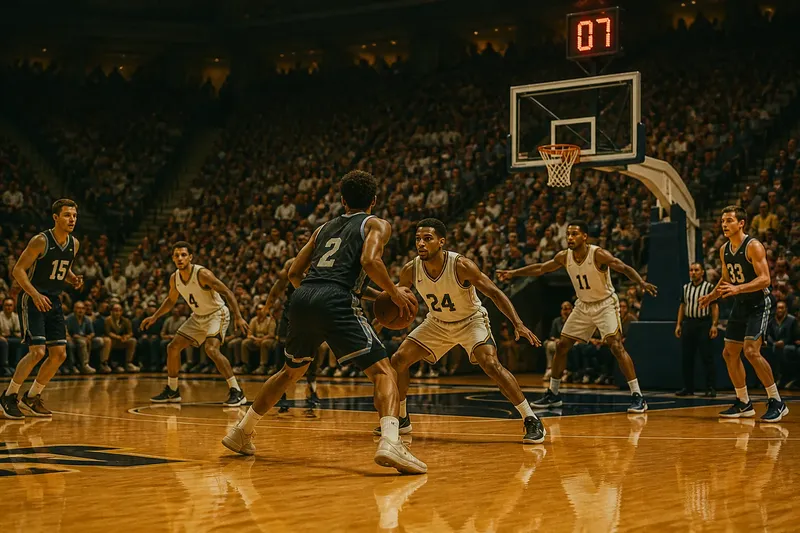
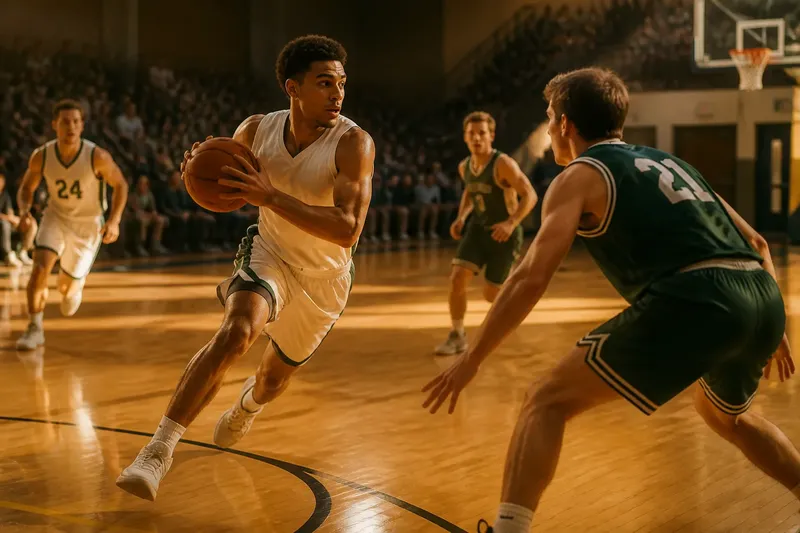
Bounce Pass or Chest Pass: Read the Space First
Learn when a bounce pass or chest pass fits the opening, so you can read how defenders, teammates, and floor space shape the ball’s route.
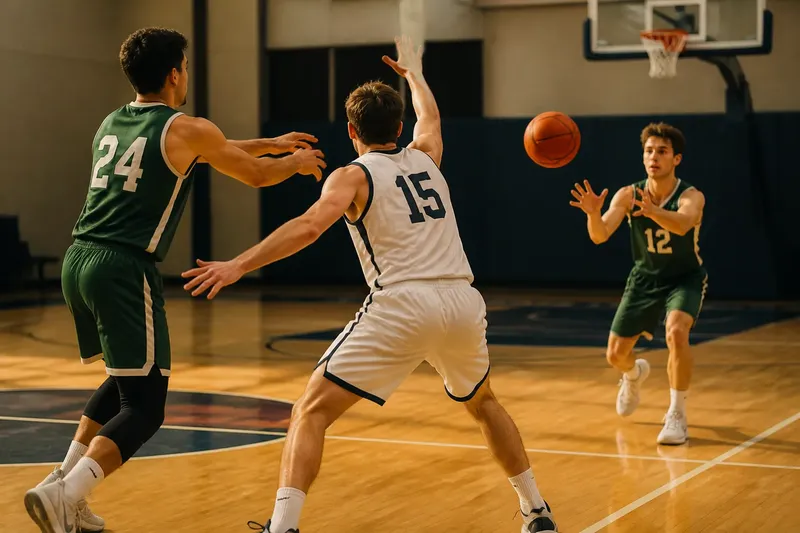
The common mistake in choosing a bounce pass or chest pass is treating one as the safer default. That choice can cost a team an opening: a defender may intercept a pass sent through a crowded lane, or a receiver may have to reach for a ball that arrived along the wrong route. To read a bounce pass or chest pass, look first at the space between passer and teammate, then ask how a defender can reach it.
What changes when the ball travels through the air or off the floor?
A chest pass travels directly from the passer toward the receiver, usually at about chest height. Its relatively flat route can reach a teammate quickly when the path is clear. Because it does not dip toward the floor, it can be easier to receive in stride without bending or changing hand position.
A bounce pass travels downward, strikes the court, and rises toward the receiver. The bounce changes the height and timing of the ball’s route. That can make it harder for a defender to reach when the defender’s arms occupy the direct lane, while giving the receiver a ball to collect around waist level or below.
Neither route is automatically safe. A chest pass can be picked off if a defender steps into its line. A bounce pass can lose its advantage if the floor is crowded, the bounce is too far from the receiver, or a defender can reach down into its path. The useful question is not “Which pass is better?” but “Which route fits this opening?”
When does a chest pass fit the opening?
Look for a direct corridor from the passer’s hands to the receiver’s hands. A chest pass is a natural option when defenders are not occupying that corridor and the receiver can present a clear target. Its straight flight can help keep a moving possession connected without asking the receiver to wait for a high arc or chase a low bounce.
The receiver’s position matters as much as the defender’s. If a teammate is facing the passer, has room to catch, and is not screened by another body, a direct pass may be easier to handle. A teammate cutting toward the ball may also benefit from a chest pass that meets the hands in front, rather than forcing the receiver to reach behind or across the body.
However, a clear-looking lane can close quickly. A defender may turn or extend an arm as the passer begins the motion. In that moment, a direct route aimed at the receiver’s chest could cross the defender’s reach. Watch the defender’s shoulders, feet, and arm position: the chest pass fits when the line remains open through the release, not merely when it looked open a moment earlier.
When does a bounce pass make more sense?
A bounce pass is useful when the direct route is guarded but the space nearer the floor is open. A defender standing between passer and teammate may have arms high or spread wide. If the ball can travel below that reach, touch the floor in an unobstructed spot, and rise to the teammate, the bounce can provide a different lane.
The intended bounce spot is important. It should be far enough from the receiver to let the ball rise into a comfortable catch, but not so far away that the ball reaches the floor where a defender or another player can claim it. The passer is reading both halves of the route: the flight before the bounce and the rise after it.
Receiver movement changes the calculation. A teammate cutting toward the basket may need the ball in front, where it can be gathered without stopping. A bounce that arrives behind the cut can slow the play or pull the receiver away from the basket. A teammate holding position may have more time to adjust, but still needs a reachable ball and an unobstructed path from the floor.
How do defenders and teammates change the route?
Read the space as a shared shape, not as an empty line between two players. A second defender may be near the receiver, while a teammate may be standing where the bounce needs to land. The route also depends on the passer’s angle. A pass that works from the wing may be blocked from the top of the key because the defender’s position and the available floor space have changed.
Imagine a passer on the right wing sees a teammate cutting toward the lane. A defender stands between them with both arms extended, but the floor just in front of the cutter is clear. If the passer sends a bounce pass that rises into the cutter’s path, the receiver may collect it moving forward; a chest pass through the defender’s reach would have a less favorable route. If another player steps into the intended bounce spot, though, the opening has changed and the original choice no longer fits.
There is no need to calculate an exact angle while watching. Track three visible things: the defender’s reach, the receiver’s direction, and the floor where the ball would bounce. Then notice whether the receiver can meet the pass without turning away from the play. These cues explain why the same passer may use different passes to reach the same teammate in different moments.
How can you judge a pass while watching a game?
Follow the ball from release to catch, rather than judging the choice only by whether the teammate receives it. A completed pass may still force the receiver to stop, stretch, or turn into pressure. A pass that misses may have started with a sound idea but gone off target. Separate the route decision from the execution when deciding what happened.
- Find the intended receiver and note whether they are moving, stationary, or changing direction.
- Locate the nearest defender and watch which part of the passing lane that defender can reach.
- Check whether a direct line to the receiver’s hands is open.
- If it is not, look at the floor space where a bounce would have to land.
- Notice whether the receiver can catch the ball in a useful position or must adjust sharply.
This is more informative than labeling every low pass as clever or every direct pass as risky. A pass fits when its route avoids the available defensive reach and meets the teammate’s movement. If the receiver has to break stride or the ball enters a defender’s space, the route may not have matched the opening even if it looked promising at release.
What should you look for in the receiver’s catch?
The catch gives a final clue about whether the route suited the situation. A chest pass often lets a receiver take the ball in front with hands ready, provided the lane is clear. A bounce pass can arrive lower and may ask the receiver to lower their hands or collect the ball while moving. Neither catch is inherently awkward; the question is whether it suits the receiver’s body position and next movement.
Watch what happens immediately after contact. Does the teammate keep moving toward an open area, or do they need to gather themselves because the ball arrived too high, too low, or behind them? A pass can reach its target and still interrupt the next action. The receiver’s control is part of the route’s usefulness, not a separate detail.
Which pass should you expect in common situations?
These quick comparisons help explain the choice without turning it into a fixed rule:
- Open direct lane: A chest pass can reach the receiver along a straightforward path, especially when they are facing the passer.
- Arms across the direct lane: A bounce pass may use clear floor space below the defender’s reach.
- Receiver cutting forward: Either pass can work if it arrives in front at a height the receiver can gather while moving.
- Congested floor near the receiver: A bounce may be vulnerable because the ball must touch down before reaching its target.
These are reading cues, not promises about what a player should choose. The defense can move, a teammate can change direction, and the passer may see another opening. A fixed preference ignores those changes; attention to the route explains the decision more clearly.
What questions help explain a pass choice?
Is a bounce pass always safer against a defender?
No. It can avoid a defender’s raised arms when the floor beneath them is open, but a low ball can still be reached or intercepted. The available path to the bounce spot matters as much as the defender’s hand position.
Why does a chest pass sometimes arrive more easily?
A direct pass can meet a receiver’s hands without the extra timing and height change created by a bounce. It is especially easy to read when the receiver faces the passer and no defender occupies the direct lane.
Can the same teammate receive either pass?
Yes. The defender’s position, the receiver’s movement, and nearby floor traffic can make one route more useful at one moment and the other route more useful later. The teammate’s identity alone does not settle the choice.
What if both routes look blocked?
The passer may look for another teammate or wait for the spacing to change. For a viewer, the useful observation is that neither route appears to offer a clean path, not that one pass must be forced.
What is not worth overanalyzing?
You do not need to guess the exact bounce point or decide that one pass is always more sophisticated. At full speed, players make decisions amid movement, and a broadcast angle may hide a defender or an open lane. Focus on the visible relationship between the ball, the defender, the receiver, and the floor.
When you watch for a bounce pass or chest pass, begin with the opening rather than the label. A direct route fits when the hands and space are clear; a bouncing route fits when it can pass under a defender and rise into the teammate’s movement. The same pass can be useful in one instant and poorly matched in the next, so read where the ball can travel before judging why it went that way.