From Set Roles to Positionless Play
Positionless basketball explained: learn how traditional positions evolved and how to read players by their changing responsibilities, not labels alone.
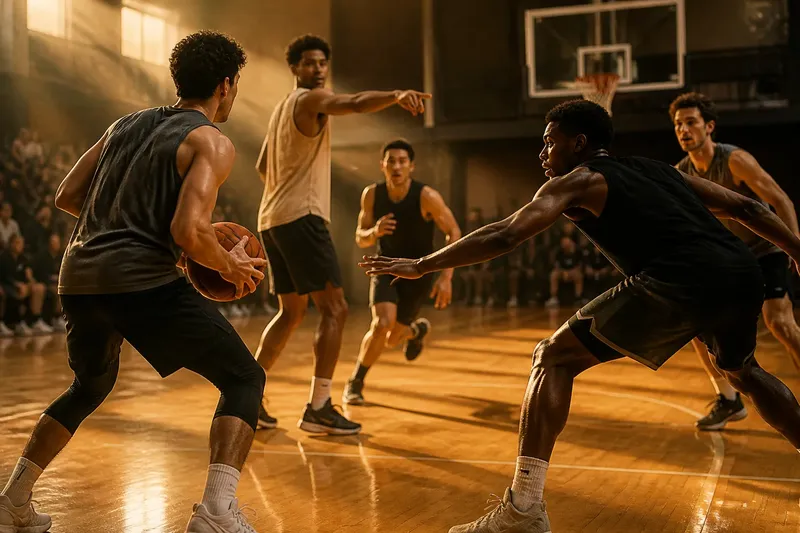
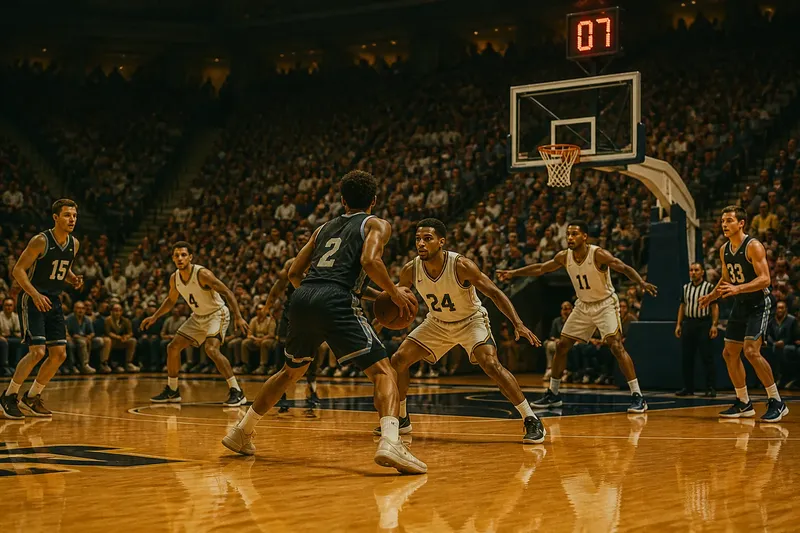
The common mistake when reading positionless basketball is to assume the positions have vanished. They have not; the labels simply explain less on their own. Follow who guards the rim, creates an advantage, or organizes the offense, and the action becomes clearer than it does through “point guard” or “center” alone.
What does positionless basketball mean?
Positionless basketball describes a style in which players’ duties are not tightly confined to the traditional point guard, shooting guard, small forward, power forward, and center roles. A center might begin a possession with a pass. A guard might defend a much larger opponent. Several players may take turns handling the ball or creating shots.
That does not mean every player can do every job equally well. Teams still need ball handling, shooting, defense, rebounding, and decisions about who takes responsibility in particular moments. The difference is that those tasks can be shared or reassigned more often.
“Positionless” means flexible roles, not a game without roles. Coaches still choose who starts an action, where a player stands, and which opponent they defend. The labels remain useful shorthand, but they do not fully describe a player’s contribution.
Why did basketball develop five conventional positions?
The familiar positions grew from the practical need to organize five players on the floor. Broadly, guards brought the ball up and directed play, forwards worked around the wings and near the basket, and a center usually occupied the interior. The labels offered a quick way to describe spacing, size, and expected duties.
Those distinctions reflected how teams commonly arranged their players, not rules requiring a particular body type or task. A point guard was generally expected to handle and distribute. A center was generally expected to contest shots near the rim and rebound. The other positions covered different combinations of perimeter scoring, defense, and interior work.
As teams changed how they attacked and defended, the categories became less exact. More players learned to shoot from farther out, handle the ball, and defend across multiple areas. A listed position can still tell you something, but it cannot reliably predict what a player will do on the next possession.
How did traditional positions differ?
Think of the five positions as a rough map of common duties. The map is useful, as long as you remember that teams can draw its boundaries differently.
- Point guard: Often brings the ball forward, starts the offense, and helps teammates get organized.
- Shooting guard: Commonly provides perimeter scoring and may handle the ball or defend opposing guards.
- Small forward: Often fills a flexible wing role, combining scoring, defense, and movement between the perimeter and the basket.
- Power forward: Traditionally works closer to the basket than a small forward, while also setting screens, rebounding, and defending larger players.
- Center: Often protects the area near the rim, rebounds, screens, and scores inside, though some centers also pass or shoot from outside.
These are tendencies, not rules. Two players listed at the same position may have sharply different skills, while players at different positions may share a major responsibility. A description such as “rim protector who also passes” can be more informative than a position name alone.
Why do position labels explain less now?
Many offenses spread players around the court to create room for drives, passes, and outside shots. If a traditional center stays near the basket while teammates attack from the perimeter, defenders may have a clear matchup and area to protect. If that center can also shoot or pass from farther away, the defense must account for more possibilities.
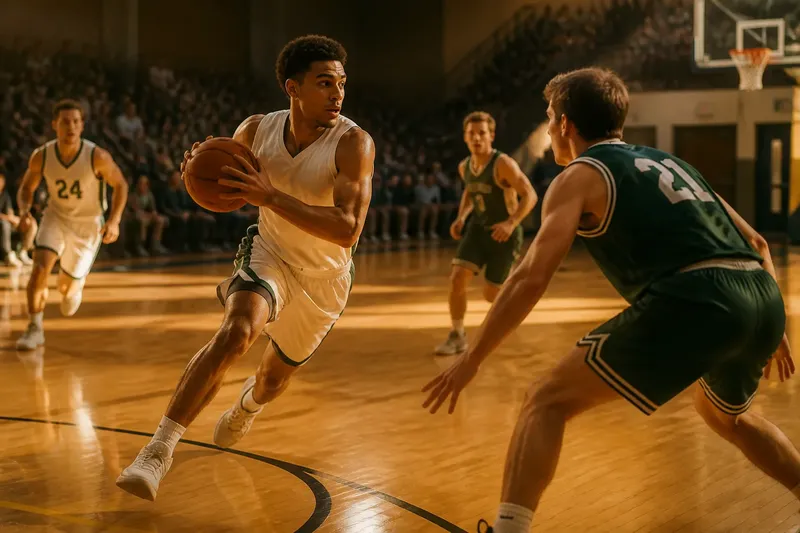
Defensive assignments are more flexible, too. A team may switch a screen, asking one defender to take over another player temporarily. A tall wing might defend a guard on one possession and a forward on the next. That does not erase height or strength differences; it shows that an assignment can depend on the action rather than the lineup card.
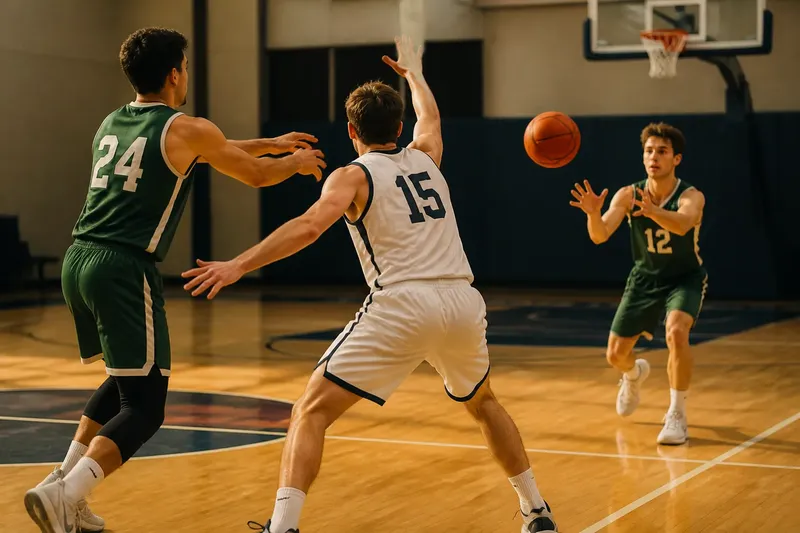
Players’ skills also overlap more than the old labels suggest. A guard may rebound and defend bigger players. A forward may start an attack with a dribble. A center may pass to create a shot for a teammate. When one player can cover several duties, the team can vary spacing and matchups without changing personnel.
Positionless play is not automatically better. A lineup still needs a sensible balance of skills and a way to handle an opponent’s size, shooting, and defensive pressure. The useful question is whether a team can assign and cover the duties its plan requires.
What should you watch instead of a player’s position?
Track responsibilities as they change during the game. Start with the ball handler: who begins the possession, and who takes over if the first action stalls? Then watch how teammates create space, set screens, cut toward the basket, or move the ball to an open player.
On defense, notice who protects the rim and who takes the opponent’s main creator. Watch whether defenders stay with their assignments or switch when a screen arrives. A switch can briefly place a smaller defender against a larger player, or a larger defender against a quicker one. Follow the action after the screen to see how the matchup develops.
Imagine a lineup with a traditional center, two wings, and two guards. One wing brings the ball up, the center screens near the top of the court, and a guard cuts behind the defense. The lineup’s listed positions do not tell the whole story; the action reveals the current jobs: handler, screener, cutter, spacer, and defender covering a particular threat.
Use these observations to decide what to watch next:
- Check who starts the offense. If a point guard brings the ball up, then watch whether that player directs the first action; otherwise, track the teammate who takes over.
- Check who creates space with a screen or cut. If a player draws a defender away, then watch for an opening; otherwise, look for a teammate creating space elsewhere.
- Check where the likely scorer moves. If that player gets open near the basket or perimeter, then follow the pass; otherwise, watch who becomes the next option.
- Check who protects the rim and pursues the rebound. If one player stays near the basket, then note that interior responsibility; otherwise, track which teammate covers it.
- Check whether defenders exchange assignments at a screen. If they do, then follow the new matchup; otherwise, watch whether each defender recovers to the original assignment.
- Check whether the same player repeats a role across possessions. If the duty recurs, then treat it as a pattern; otherwise, describe it as a one-play assignment.
Do not assign a permanent role from one play. A player can screen on one possession and handle the ball on another. Look for recurring responsibilities, then notice when the team deliberately changes them.
Which questions help make sense of positionless play?
Does positionless basketball mean a team has no center?
No. A team can use a center and still ask that player to pass, screen away from the basket, or defend outside the paint. The term describes flexible duties, not the absence of a tall interior player.
Are traditional positions still useful?
Yes. Position names provide a quick starting point for understanding a lineup and the skills its players may bring. Treat them as broad descriptions, then check what each player actually does.
Why might a forward handle the ball?
A forward may have the passing or dribbling skills to start an action, or the team may use that player to create a different defensive matchup. The position label does not prevent a player from taking on a playmaking duty.
How can you tell whether a team is switching on defense?
Watch what happens when an offensive player sets a screen: if the two defenders exchange the players they are guarding, they have switched. A brief exchange or recovery can look similar, so follow both defenders after the screen rather than judging from one instant.
Is memorizing every position label worth the effort?
Learn the five conventional names because they make broadcasts, lineups, and basic discussions easier to follow. It is not worth the effort to treat them as fixed job descriptions or to infer a player’s full skill set from a label. If a commentator calls someone a forward, that tells you the conventional slot; the possession tells you the work being done.
Positionless basketball is easiest to understand when you use both kinds of information. Keep traditional positions as a rough map, then follow the responsibilities on the court: who creates, spaces, screens, protects the rim, and takes over a defensive assignment. For example, in the lineup above, the wing is the handler and the center is the screener on that play, regardless of their usual labels. This gives you a clearer read of how roles shift from one possession to the next.