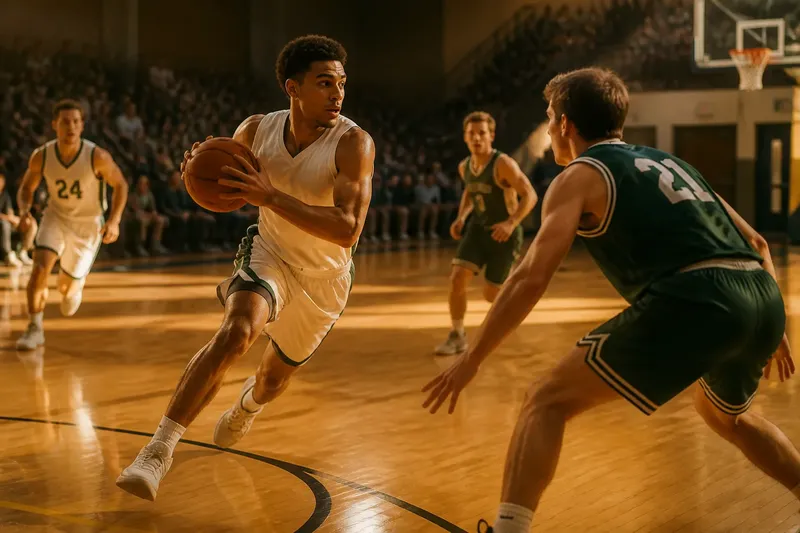
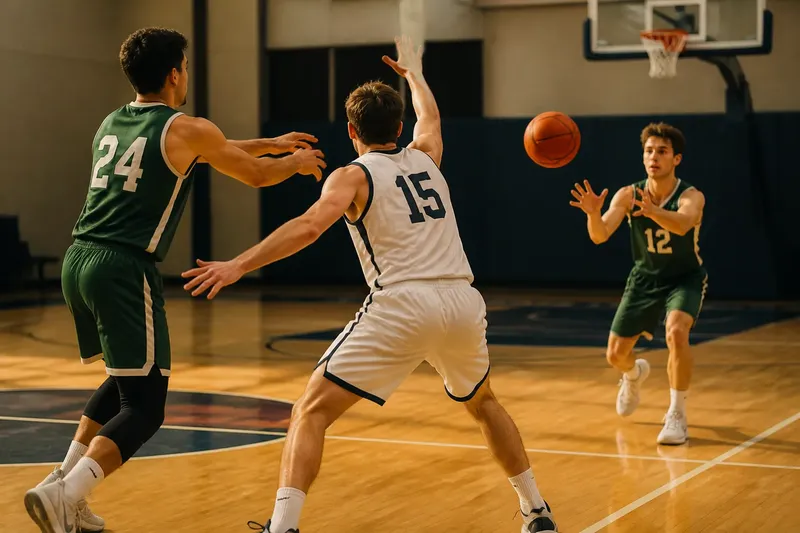
The Shot Clock Changes the Shape of a Possession
The shot clock changes the choices in a basketball possession. Learn to read its resets, late decisions, and expiration without mistaking urgency for panic.
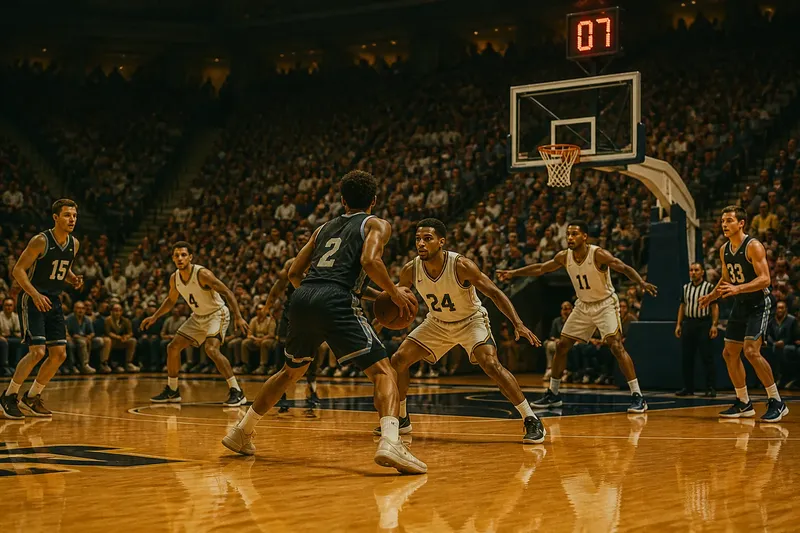
The most common mistake in reading a shot clock is treating every low number as a command to shoot immediately. The shot clock shapes a basketball possession by changing which choices remain available; misreading it can make a patient attack look passive and a hurried shot look inevitable. Follow one possession from the inbound to its result, and the difference becomes clear.
What does the shot clock change?
The shot clock limits how long the offense can control the ball before attempting a shot that meets the applicable rules. Its purpose is to prevent a team from holding the ball indefinitely, but its effect is broader: it gives each decision a deadline. A pass, a screen, a drive, or a reset all consume part of the available time.
The clock does not tell players which action to choose. It changes the value of waiting. Early in a possession, the offense can move the ball, look for a mismatch, or let a play develop. As the clock runs down, options that need several passes or a slow setup become harder to complete. The team may still make a deliberate choice, but it has fewer chances to change its mind.
How does the shot clock shape one possession?
Imagine a hypothetical possession in a league whose rules set a twenty-four-second shot clock. The offense inbounds the ball, and its point guard brings it across midcourt. The defense is set, so the guard does not force a drive into traffic. Instead, a teammate comes up to set a screen near the top of the key.
The guard uses the screen, but a defender switches onto the ball. The original defender stays with the screener. There may be a mismatch, yet the pass to the screener is crowded. The guard pulls the ball back and passes to a wing. That choice takes time, but it also moves the defense and keeps the offense from attacking a closed lane.
Now imagine the wing tries a pass to a cutter, but the defender gets a hand near the passing lane. The wing keeps possession and swings the ball back toward the top. The team has not wasted the possession merely because it did not shoot on its first opening. It has avoided a risky pass and made the defense shift again. But the clock has narrowed the next decision: the offense cannot restart its entire plan as if no time had passed.
The guard receives the return pass and sees the defense still recovering. Rather than call for another screen and wait, the guard drives into the gap. A help defender steps over, so the guard passes to a teammate outside the lane. That player has room to take a balanced shot. The shot goes up before the clock expires. In this invented scenario, the possession ends with a contested but intentional attempt, not a blind toss forced by the final instant.
The result could have been a made shot, a miss, or a turnover; the clock alone does not determine that. What it does is shape the sequence. The offense used early time to read the defense, then shortened its decision cycle as the remaining opportunity became more limited.
Why isn’t a low clock always a rushed shot?
A low clock can make a shot urgent without making it random. A player may use a quick dribble to create a clean look, pass to a teammate already in position, or take a controlled shot that is less ideal than an earlier possibility. The question is not simply whether the shot came late. Ask whether the player had time to see the defense, choose an action, and execute it.
Teams often prepare options for late-clock situations, such as a screen that creates room for a shooter or a drive that draws help and opens a pass. From the stands, you may not see a full play unfold. Watch for a player who takes responsibility for the ball, a teammate who clears space, and a decision made before the clock reaches its last instant.
A late shot can still be the best available choice. The offense may have spent earlier time probing for a better opening, or the defense may have taken those openings away. Calling every such attempt careless ignores the choices that led to it.
What should you watch as the clock runs down?
Track the ball and the clock together, rather than staring at the display alone. Notice whether the offense is moving the defense, whether a player is holding the ball with no clear next action, and whether teammates are positioned to receive a pass. These cues help explain why a team speeds up, changes sides, or commits to a shot.
- At the start: Check whether the ball handler brings the ball forward under control; if the defense leaves space, then watch for an early attack, but if it is set, then look for a pass or screen.
- During the setup: Check whether screens, cuts, and passes move defenders; if they create an opening, then watch for an attack, but if defenders close it, then look for the next option.
- As time narrows: Check whether the offense has a clear next action; if a direct drive or quick pass is available, then watch for it, but if not, expect a player to create a shot before time expires.
- At the attempt: Check whether the ball leaves the shooter’s hands before the signal; if it does, then assess whether the attempt meets the rules, but if it does not, then expect a possible shot-clock violation.
- After a rebound: Check the displayed clock and the officials’ ruling; if the rules call for a reset, then read the new time under that competition’s rules, but if play continues without a reset, then do not assume the offense has a fresh possession.
- After a change of possession: Check whether the new team has established control; if it has, then expect the applicable new-possession clock, but if the ball is still loose or merely deflected, then wait for control and the official’s ruling.
The displayed reset matters because it changes the possession’s remaining options. Reset rules vary by competition and situation, so use the league’s rules when interpreting a particular game. You do not need to memorize every edge case to understand the basic rhythm.
When does the shot clock reset, and what happens at zero?
Does every change of possession start a new clock?
A new team gaining control generally begins a fresh possession under the competition’s shot-clock rules. A loose ball or deflection alone may not establish control, so the action and the official’s ruling both matter.
Does an offensive rebound reset the shot clock?
An offensive rebound can give the attacking team additional time, but the reset may be partial rather than full. Check the applicable league rule and the display; do not assume every rebound wipes the clock clean.
What happens if the ball is still in the shooter’s hands at zero?
If the ball is still in the shooter’s hands when the clock expires, the shot has not been released in time and a shot-clock violation generally follows. If the ball left the hand before expiration, officials judge whether the attempt meets the competition’s rules, using the shot-clock signal and replay procedures where available.
Does a shot count if it leaves before zero but misses the rim?
The ruling depends on the governing rule and the details of the attempt, including whether the ball touched the rim or basket and whether the shot otherwise meets the rule’s conditions. If it does not, officials may call a violation and award possession to the other team.
What effort is not worth it?
It is not worth trying to infer a player’s intention from the clock alone or memorizing every rule variation before watching a game. Start with the visible sequence: how the offense uses its early time, what changes as the deadline approaches, and whether the final action is controlled. The shot clock is easiest to understand as a shrinking set of choices, not a countdown that commands one particular shot.
When you read the shot clock this way, a possession becomes more than a wait for a basket. The next time a team passes up an early opening, watch what that choice buys: a better angle, a defensive shift, or simply another decision before time runs out.